
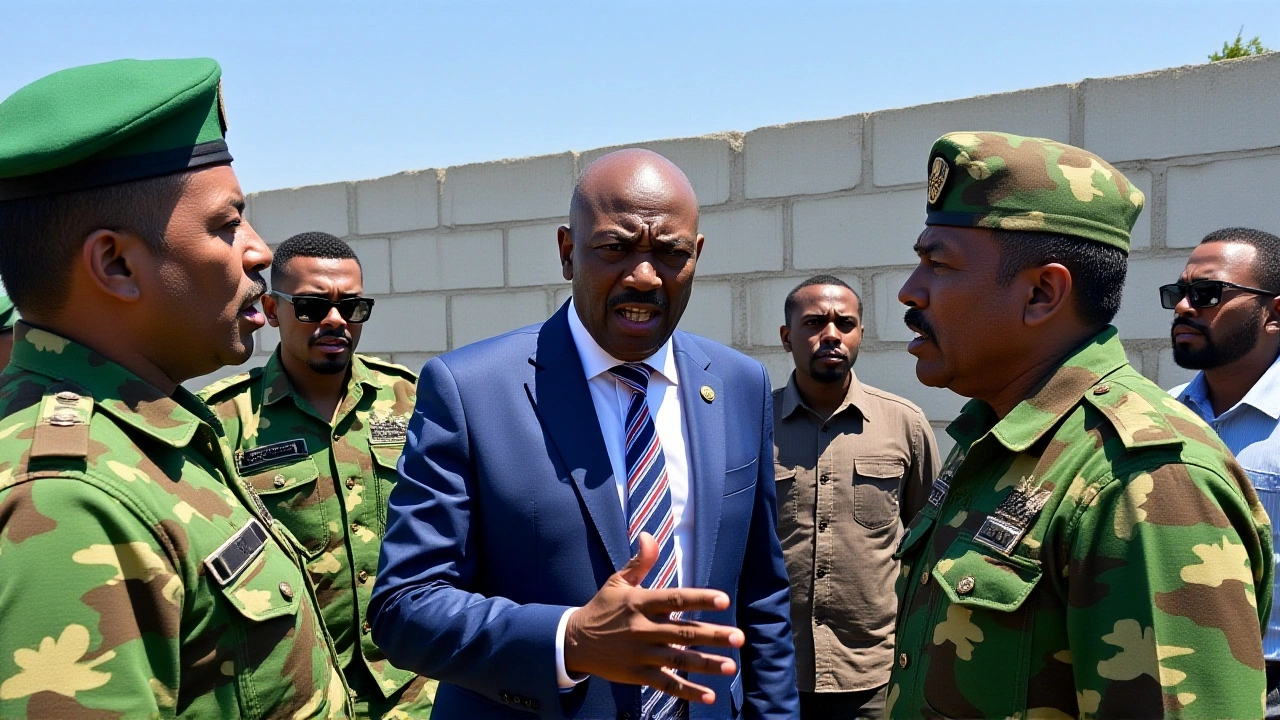
On November 11, 2025, Nyesom Wike, the Federal Capital Territory Administration (FCTA) Minister, stood face-to-face with armed Nigerian military personnel at a 30-hectare plot in Gaduwa village, Abuja — not in a battlefield, but in a battle over land. His arrival with 50 police officers and two bulldozers was meant to demolish structures already built by retired and serving officers. What followed wasn’t just a demolition attempt. It was a public explosion of institutional tension, caught on video and shared across Nigeria in seconds. The land, once allocated to military personnel including Vice Admiral Awwal Zubairu Gambo (retired), had been revoked by Wike and allegedly reassigned to political allies — one of whom, sources say, is Prof Sam Amupitan, Chairman of the Independent National Electoral Commission (INEC). The twist? The military didn’t back down. They stood their ground. And Wike, for all his bluster, didn’t take them to court.
The Land That Started It All
The 30-hectare parcel in Gaduwa was originally designated as a green zone for public park development, according to a 2022 letter from the FCTA Parks and Recreation Department. But over time, it was subdivided by private developers — Santos Estates Limited and Kuro International Ventures — and later allocated to military personnel as housing. That’s standard practice in Abuja, where retired officers often receive land as part of their benefits. What’s not standard? Revoking those allocations without notice, without hearings, and without titles being formally nullified. According to a legal practitioner who spoke exclusively to SaharaReporters, Wike’s administration revoked the land in early 2025 — then quietly reallocated it. "The same was reallocated to Wike’s political associates," the lawyer said. "One of whom we were told in confidence is the current INEC Chairman." That’s a bombshell. INEC’s credibility is already under scrutiny. Allegations that its chairperson benefited from a land grab — especially one involving the military — could fuel distrust ahead of next year’s elections."You Cannot Tell Me"
The confrontation on November 11 was no accident. Wike arrived with bulldozers and police, expecting compliance. Instead, Captain Adam Yariman and other officers blocked access. Video footage shows Wike, visibly angry, shouting: "I’m a minister. You cannot tell me. You cannot continue this way. This country cannot continue along this line." His words were meant to assert authority. But they backfired. The military didn’t respond with force. They didn’t need to. Their silence, their presence, their refusal to move — that was the statement. The Nigerian Army later issued a statement challenging Wike to "take this to court," adding, "We respect the rule of law. Let the courts decide." Wike hasn’t. Not once. "He’s refused to go to court," the legal source told SaharaReporters. "Apparently because he knows he’s wrong." It’s a damning admission — not from a critic, but from someone with direct knowledge of the legal filings. The FCTA’s Department of Development Control claims the land had no building approvals. But multiple military officers say they received written allocations from the Nigerian Army’s Housing Board, and had begun construction. One officer showed documents dated 2023. Another showed payment receipts for land fees.Who Benefits? The Reallocation Puzzle
Here’s the uncomfortable truth: land in Abuja is the most valuable political currency. The FCTA controls over 7,000 hectares of land. Since taking office in August 2023, Wike has demolished over 200 unauthorized structures — many of them middle-class homes. He calls it "restoring the master plan." Critics call it selective enforcement. The 30-hectare plot in Gaduwa? It’s now vacant. But who will build there? The legal source says it’s been earmarked for "political associates." And the name that keeps coming up? Prof Sam Amupitan. While INEC has denied any involvement, the timing is suspicious. Amupitan was appointed in 2023 — the same year Wike became FCT Minister. And now, this land? It’s been wiped clean. For whom? Even more troubling: the FCTA’s own records show the land was never formally de-allocated by the Army. No minister, no matter how powerful, can unilaterally revoke military land allocations. That requires approval from the Ministry of Defence, the National Assembly, and often the President. Yet, no such process was followed.Wike’s Broader Crackdown — Or Political Cleansing?
On the same day as the confrontation, Wike’s office announced a 14-day window for property owners in Asokoro, Maitama, Garki, and Wuse to pay a ₦5 million fine for "violating approved land-use provisions." That’s roughly $3,000 — a steep penalty for many, but a pittance for the wealthy. The move feels less like enforcement and more like a revenue grab disguised as reform. AfricaCheck debunked claims that President Bola Ahmed Tinubu supported the soldiers. But that’s not the real question. The real question is: Why did the President stay silent? If this were a civilian land grab, the presidency would have intervened. But when the military is involved — and when the minister behind it is a key political ally — silence speaks volumes.What Happens Next?
The land remains fenced off. No bulldozers have returned. The military still guards it. Wike hasn’t returned. The FCTA hasn’t filed a lawsuit. The INEC chairman hasn’t commented. And the former naval chief? He’s still waiting — with papers in hand, and a quiet determination. Legal experts say the case could set a national precedent. If a minister can revoke military land without due process, what stops him from doing the same to civil servants, journalists, or opposition leaders? The rule of law isn’t just about courts. It’s about who gets to play by the rules — and who gets to rewrite them.Frequently Asked Questions
Why didn’t Wike take the military to court?
Legal experts believe Wike avoided court because his revocation lacked legal foundation. The FCTA never followed the required procedures: no public notice, no hearing, no formal de-allocation from the Nigerian Army. Without those, any lawsuit would likely be dismissed. Courts have previously ruled against FCTA over similar land grabs, especially when military allocations are involved.
How did military personnel get the land in the first place?
Retired and serving Nigerian military personnel have long received land allocations through the Army Housing Board as part of their benefits. These allocations were documented and often paid for. In Gaduwa, multiple officers produced 2022–2023 allocation letters and payment receipts — documents the FCTA has not invalidated through proper channels.
Is Prof Sam Amupitan really the new beneficiary?
While INEC has denied involvement, multiple credible sources, including a legal practitioner with direct access to FCTA internal documents, identified Amupitan as one of the beneficiaries. His appointment as INEC Chairman in 2023 coincides with Wike’s land reassignments. The lack of transparency raises legitimate concerns about conflict of interest, especially with elections approaching.
What’s the significance of the 2022 FCTA Parks Department letter?
That letter shows the land was officially designated as a green zone — meaning any construction was illegal. But it also reveals a contradiction: if it was always a park, why was it allocated to military personnel? The FCTA’s shifting justifications suggest administrative chaos — or deliberate manipulation to justify revocation after the fact.
Why does this matter to ordinary Nigerians?
Because if powerful figures can seize land from retired soldiers without consequence, no one’s property is safe. This isn’t just about Abuja. It’s about the erosion of legal protections for ordinary citizens. If due process is ignored for military officers, what hope is there for a teacher, a trader, or a small business owner?
Has President Tinubu taken a stance?
AfricaCheck confirmed no evidence that President Tinubu publicly supported the soldiers. But his silence is telling. In Nigeria, presidential silence on a land dispute involving the military and a powerful minister often signals tacit approval — or political calculation. With Wike being a key ally, Tinubu’s non-intervention may be strategic, but it undermines public trust in impartial governance.



Post A Comment